Honeywell Home Thermostat: Smart HVAC & Energy Efficiency Guide 2026
Modern thermostats have evolved from simple temperature controllers into sophisticated components of residential HVAC systems. In 2026, homeowners increasingly expect their climate-control equipment to provide convenience, energy efficiency, remote access, and intelligent automation.
A honeywell home thermostat can be part of this transition, particularly when paired with compatible heating and cooling equipment and properly configured controls. Smart thermostat technology can provide scheduling, Wi-Fi connectivity, temperature monitoring, and integration with broader smart-home ecosystems.
As HVAC technology advances, understanding thermostat capabilities can help homeowners make better decisions about comfort, energy management, and system maintenance.
Smart Thermostats Are Becoming More Intelligent
Traditional programmable thermostats rely primarily on schedules created by homeowners. Modern connected thermostats can incorporate additional information, including occupancy, weather, humidity, and historical temperature preferences.
This allows climate-control systems to respond dynamically instead of simply following a fixed timetable.
For example, a smart thermostat can reduce heating or cooling when a home is unoccupied and restore a preferred temperature as occupants return. Some connected systems can also provide recommendations based on energy consumption.
Artificial intelligence and machine learning are increasingly being incorporated into smart-home technology, making automated climate management more responsive.
Remote Control Adds Convenience
One of the most useful features of connected thermostats is remote access. Homeowners can use compatible smartphone applications to monitor indoor conditions and adjust temperature settings when away from home.
This can be useful when schedules change unexpectedly. Instead of returning to a home that has been heating or cooling unnecessarily, users can adjust settings remotely.
Remote access can also provide notifications about temperature changes or other system events, giving homeowners greater awareness of HVAC operation.
Energy Efficiency Is a Major 2026 Trend
Energy efficiency continues to influence residential HVAC technology. Smart thermostats can help reduce unnecessary heating and cooling by using programmed schedules, occupancy information, and adaptive temperature management.
However, thermostat efficiency depends on the entire HVAC system.
An advanced thermostat cannot compensate for an improperly sized air conditioner, restricted airflow, poor insulation, dirty filters, or neglected equipment maintenance.
For this reason, smart controls should be considered one component of a broader energy-efficiency strategy.
Learning Technology Can Simplify Scheduling
Many modern smart thermostats are designed to reduce the amount of manual programming required from homeowners.
Instead of creating a detailed schedule for every day, intelligent systems may analyze household routines and adapt temperature settings automatically.
Learning features can be particularly helpful for households with changing schedules.
However, homeowners should still review automated settings periodically. A thermostat may interpret unusual routines differently from how the homeowner expects, and manual adjustments may occasionally be necessary.
Understanding Hold and Schedule Functions
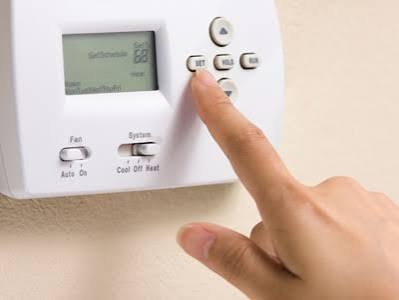
Smart and programmable thermostats often include temporary and permanent temperature adjustment functions.
A temporary hold can maintain a selected temperature for a limited period, while a permanent hold may continue until the homeowner manually returns the thermostat to its programmed schedule.
Understanding these functions is important because an active hold can prevent the thermostat from following its normal schedule.
If temperature changes appear unexpected, homeowners should check whether a hold or manual override is active before assuming that the HVAC equipment has malfunctioned.
Predictive HVAC Diagnostics Are Expanding
Smart thermostats are increasingly being integrated with connected HVAC equipment. When compatible systems communicate with each other, operating information can provide useful insights into equipment performance.
For example, unusually long cooling cycles or significant temperature differences may indicate that an HVAC system is operating differently from its normal pattern.
Predictive diagnostics can help identify potential issues earlier, allowing homeowners to arrange professional inspection before a minor problem develops into a major breakdown.
This approach is becoming increasingly important as homeowners seek to reduce emergency repairs and extend equipment lifespan.
Indoor Air Quality Is Joining Temperature Management
Modern residential climate control is increasingly focused on more than temperature. Humidity, ventilation, filtration, and indoor air quality are becoming important parts of the smart-home environment.
Some connected HVAC systems can monitor humidity and integrate with equipment designed to manage moisture.
Maintaining appropriate humidity can improve comfort and support better indoor environmental conditions.
Advanced filtration can also help reduce airborne particles, although filters should always be selected according to the HVAC system's requirements to avoid excessive airflow resistance.
Smart Home Integration Continues Growing
Thermostats are becoming central components of connected homes. Depending on the model and compatible ecosystem, smart thermostats can interact with voice assistants, smartphones, sensors, and other automated devices.
This integration allows homeowners to create more comprehensive comfort strategies.
For example, occupancy sensors can provide information about whether rooms are being used, while smart controls can adjust HVAC operation accordingly.
The result is a more responsive home environment that can balance comfort and energy consumption.
Proper Installation and Configuration Matter
Even the most advanced thermostat requires proper installation and configuration. Incorrect wiring, incompatible equipment, or inappropriate system settings can cause performance problems.
Homeowners replacing an older thermostat should confirm compatibility with their heating and cooling equipment before installation.
Professional assistance can be particularly valuable for complex HVAC systems, heat pumps, multi-stage equipment, zoning systems, or unfamiliar wiring configurations.
Correct setup ensures that the thermostat communicates properly with the HVAC equipment and uses its available features as intended.
Choosing a Modern Thermostat
When evaluating a honeywell home thermostat, homeowners should consider factors such as HVAC compatibility, Wi-Fi connectivity, scheduling options, remote access, smart-home integration, energy reporting, and ease of use.
The best choice depends on the home's HVAC equipment and the homeowner's specific requirements.
A thermostat with numerous advanced features is not necessarily the best option if those features are incompatible with the existing system.
Professional HVAC guidance can help determine which control strategy makes sense for a particular property.
The Future of Smart Climate Control
Smart thermostat technology will continue developing throughout 2026 and beyond. Artificial intelligence, predictive diagnostics, occupancy sensing, remote monitoring, and energy-management features are making residential HVAC controls increasingly intelligent.
For homeowners, the goal is not simply to have more technology but to use technology effectively. Proper configuration, sensible temperature settings, regular HVAC maintenance, and timely professional service remain essential.
As connected climate systems continue evolving, smart thermostats will play an increasingly important role in creating homes that are comfortable, efficient, responsive, and easier to manage.

About Premium Author
This post has been authored and published by one of our premium contributors, who are experts in their fields. They bring high-quality, well-researched content that adds significant value to our platform.

Popular Categories
Stay Connected
Recent Posts