Multi Rotor Drones: Applications, Benefits and Industry Uses
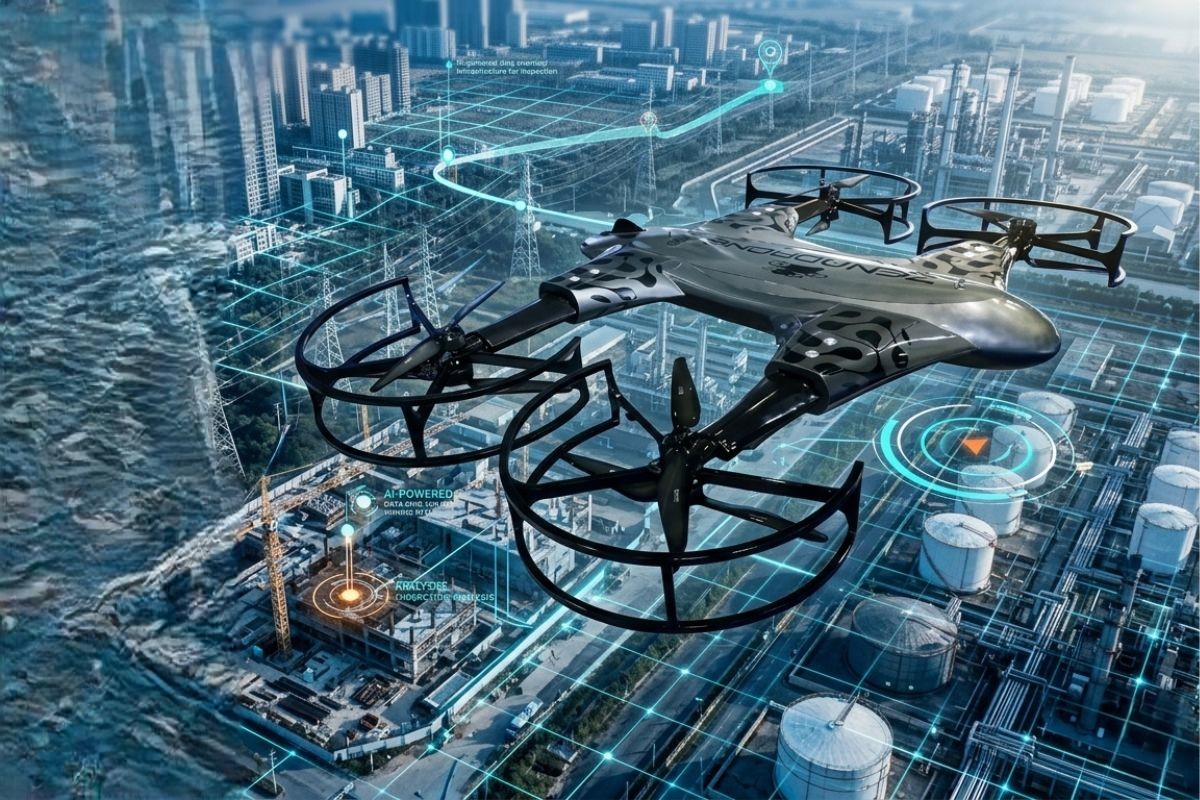
Multi Rotor Drones have transformed the way industries collect data, inspect infrastructure, monitor assets, and capture aerial imagery. From construction sites and agricultural fields to emergency response operations, these versatile aircraft have become essential tools for modern businesses and organizations.
Unlike traditional aircraft, multi rotor systems use multiple propellers to generate lift and maintain stability. Their ability to hover precisely, maneuver in tight spaces, and carry advanced sensors makes them ideal for a wide range of commercial and industrial tasks.
As drone technology continues to evolve, organizations are increasingly exploring advanced capabilities such as automation, artificial intelligence, and autonomous flight. Understanding how multi rotor platforms compare with alternatives such as the Single Rotor Drone is crucial for selecting the right solution.
This guide explores the technology behind multi rotor drones, their advantages and limitations, leading use cases, and how they support today's growing demand for Industrial Drone Solutions, inspections, and surveillance operations.
What Are Multi Rotor Drones?
A Multi Rotor Drone is an unmanned aerial vehicle (UAV) that uses multiple rotors to generate lift and control movement. The most common configurations include:
- Tricopters (3 rotors)
- Quadcopters (4 rotors)
- Hexacopters (6 rotors)
- Octocopters (8 rotors)
Definition
A multi rotor drone is a UAV that relies on multiple independently controlled propellers to achieve lift, stability, hovering capability, and directional movement.
Because each rotor can be adjusted individually, these drones can maintain exceptional balance and positioning accuracy even in challenging environments.
How Multi Rotor Drones Work
Multi rotor drones operate through a combination of:
- Electric motors
- Propellers
- Flight controllers
- GPS systems
- Sensors and cameras
- Communication systems
The flight controller continuously adjusts motor speeds to stabilize the aircraft and execute commands.
For example:
- Increasing speed on rear rotors moves the drone forward.
- Adjusting opposing rotors enables turning.
- Equal thrust across all rotors allows stable hovering.
This design provides exceptional maneuverability compared to many traditional aerial platforms.
Multi Rotor Drones vs. Single Rotor Drone
One of the most common questions among drone buyers is how a Single Rotor Drone compares to a multi rotor system.
What Is a Single Rotor Drone?
A single rotor drone resembles a helicopter, using one large primary rotor and a smaller tail rotor for stability and directional control.
Key Differences
| Feature | Multi Rotor Drones | Single Rotor Drone |
| Hover Stability | Excellent | Good |
| Ease of Use | High | Moderate |
| Flight Time | Moderate | Longer |
| Maintenance | Lower | Higher |
| Maneuverability | Excellent | Good |
| Payload Capacity | Moderate | High |
| Training Requirements | Low | Higher |
When Multi Rotor Drones Are Better
Multi rotor platforms excel in:
- Infrastructure inspections
- Aerial photography
- Precision mapping
- Surveillance missions
- Indoor operations
When Single Rotor Drones Are Better
Single rotor systems are often preferred for:
- Long-range missions
- Heavy payload transport
- Extended flight durations
- Large-scale industrial surveys
Advantages of Multi Rotor Drones
The growing popularity of multi rotor systems is driven by several important benefits.
Exceptional Hovering Capability
One of the biggest strengths of multi rotor drones is their ability to remain stationary in the air.
This is particularly valuable for:
- Inspections
- Surveying
- Monitoring operations
- Search and rescue missions
Easy Deployment
Most multi rotor drones can be launched within minutes without requiring runways or specialized infrastructure.
Precision Flight Control
Advanced stabilization systems allow operators to:
- Fly close to structures
- Navigate confined spaces
- Collect highly accurate data
Cost-Effective Operations
Compared with helicopters and other aircraft, multi rotor drones offer:
- Lower acquisition costs
- Reduced fuel expenses
- Minimal maintenance requirements
Flexible Sensor Integration
Modern drones can carry:
- High-resolution cameras
- Thermal imaging sensors
- LiDAR systems
- Multispectral sensors
- Gas detection equipment
Limitations of Multi Rotor Systems
Despite their advantages, multi rotor drones are not perfect.
Limited Flight Duration
Most commercial systems operate between:
- 20–50 minutes per battery
This can restrict coverage during large-scale missions.
Reduced Payload Capacity
Compared with a Single Rotor Drone, multi rotor systems generally carry lighter payloads.
Weather Sensitivity
Strong winds, rain, and extreme temperatures can affect flight performance and operational safety.
Battery Dependence
Electric-powered drones require regular charging or battery replacement, which may impact productivity during extended field operations.
Multi Rotor Drone Applications Across Industries
The versatility of multi rotor platforms has created countless opportunities for businesses and government organizations.
Construction and Infrastructure
Construction companies use drones to:
- Monitor project progress
- Create 3D site models
- Track equipment
- Improve safety compliance
Real-time aerial visibility helps managers make informed decisions while reducing costly delays.
Agriculture
Farmers increasingly rely on drones for:
- Crop health monitoring
- Irrigation management
- Pest detection
- Yield forecasting
High-resolution imagery enables precision agriculture practices that improve productivity.
Energy Sector
Energy companies deploy drones to inspect:
- Power lines
- Solar farms
- Wind turbines
- Oil and gas facilities
Drone inspections significantly reduce risks associated with manual inspections.
Public Safety
Emergency services utilize drones for:
- Disaster assessment
- Search and rescue
- Fire monitoring
- Crowd management
The ability to quickly access aerial intelligence can save lives during critical situations.
Media and Entertainment
Professional filmmakers use multi rotor drones to capture:
- Cinematic footage
- Sports coverage
- Live events
- Tourism content
Their stable hovering capability produces smooth and professional aerial shots.
Industrial Drone Solutions for Modern Businesses
The rise of Industrial Drone Solutions has fundamentally changed how organizations manage assets and operations.
Asset Management
Businesses use drones to inspect:
- Bridges
- Cell towers
- Pipelines
- Warehouses
- Industrial facilities
This approach reduces operational disruptions while improving inspection frequency.
Data-Driven Decision Making
Drone-generated data provides:
- Accurate measurements
- Digital twins
- Predictive maintenance insights
- Risk assessments
Organizations can identify issues before they become costly failures.
Workforce Safety
One of the most important benefits of industrial drone programs is improved worker safety.
Instead of sending personnel to:
- Tall structures
- Hazardous environments
- Confined spaces
Drones can perform inspections remotely.
Autonomous Drones and the Future of Operations
The next major evolution in aerial technology involves Autonomous Drones.
What Are Autonomous Drones?
Autonomous drones are UAVs capable of performing missions with minimal human intervention using:
- Artificial intelligence
- Computer vision
- GPS navigation
- Obstacle avoidance systems
Benefits of Autonomous Operations
Organizations benefit from:
- Reduced labor requirements
- Consistent data collection
- Increased operational efficiency
- Improved scalability
Real-World Examples
Autonomous drones are already being used for:
- Warehouse inventory tracking
- Utility inspections
- Security patrols
- Agricultural monitoring
- Environmental surveys
As AI technologies mature, autonomy will continue expanding across commercial industries.
Drone Surveillance and Inspection Technologies
Drone Surveillance and Inspection Explained
Drone Surveillance and Inspection refers to the use of UAVs equipped with sensors and cameras to monitor assets, infrastructure, facilities, and operational environments.
Surveillance Applications
Organizations use drones to monitor:
- Industrial sites
- Borders
- Critical infrastructure
- Construction projects
- Public events
Inspection Applications
Inspection drones help evaluate:
- Structural integrity
- Equipment condition
- Thermal anomalies
- Corrosion
- Safety hazards
Advantages Over Traditional Methods
Compared with manual inspections, drone-based approaches provide:
- Faster data collection
- Reduced downtime
- Improved safety
- Better documentation
- Lower operational costs
How to Choose the Right Drone for Critical Projects
Selecting the right drone requires careful evaluation of mission requirements.
Consider Flight Time
Ask:
- How long must the drone remain airborne?
- How large is the coverage area?
Long-duration missions may favor single rotor systems.
Evaluate Payload Requirements
Consider whether the drone must carry:
- Cameras
- LiDAR
- Thermal sensors
- Specialized equipment
Assess Environmental Conditions
Weather, terrain, and operational complexity should influence platform selection.
Review Regulatory Requirements
Organizations should ensure compliance with:
- Local aviation regulations
- Pilot certification requirements
- Privacy and safety standards
Match the Drone to the Mission
For most inspection, surveillance, mapping, and photography tasks, multi rotor drones provide the ideal balance of flexibility and performance.
Conclusion
Multi Rotor Drones have become a cornerstone of modern aerial operations, delivering reliable performance across industries ranging from agriculture and construction to energy and public safety. Their ability to hover precisely, collect detailed data, and operate in confined spaces makes them one of the most versatile UAV platforms available today.
While a Single Rotor Drone may offer longer flight times and greater payload capacity, multi rotor systems remain the preferred choice for many commercial and industrial missions due to their ease of deployment, stability, and operational flexibility. As Industrial Drone Solutions continue to evolve, the integration of Autonomous Drones will further enhance efficiency, safety, and scalability.
Organizations investing in Drone Surveillance and Inspection programs should carefully evaluate mission objectives, environmental conditions, and payload requirements before selecting a platform. With the right approach, multi rotor technology can provide significant operational advantages and long-term business value.
Frequently Asked Questions (FAQs)
What are multi rotor drones used for?
Multi rotor drones are commonly used for aerial photography, infrastructure inspections, mapping, agriculture, surveillance, construction monitoring, and public safety operations.
How do multi rotor drones differ from a single rotor drone?
Multi rotor drones use multiple propellers for lift and stability, while a single rotor drone uses one main rotor and a tail rotor. Single rotor systems generally offer longer flight times but require more maintenance.
Are autonomous drones replacing human pilots?
Not entirely. Autonomous drones reduce manual workload and automate repetitive tasks, but human oversight remains important for safety, compliance, and mission planning.
What industries benefit most from industrial drone solutions?
Industries including energy, construction, agriculture, telecommunications, mining, logistics, and public safety benefit significantly from industrial drone technologies.
Why are drones effective for surveillance and inspection?
Drone surveillance and inspection systems improve safety, reduce costs, provide faster data collection, and allow access to areas that may be dangerous or difficult for human inspectors.

About Premium Author
This post has been authored and published by one of our premium contributors, who are experts in their fields. They bring high-quality, well-researched content that adds significant value to our platform.
You Might Also Like


Popular Categories
Stay Connected
Recent Posts